Weight Loss
Calorie Deficit for Weight Loss: How to Do It Right
A calorie deficit is the only proven way to lose fat. Here is how to set one up that you can actually sustain.
June 8, 2026 · 9 min read
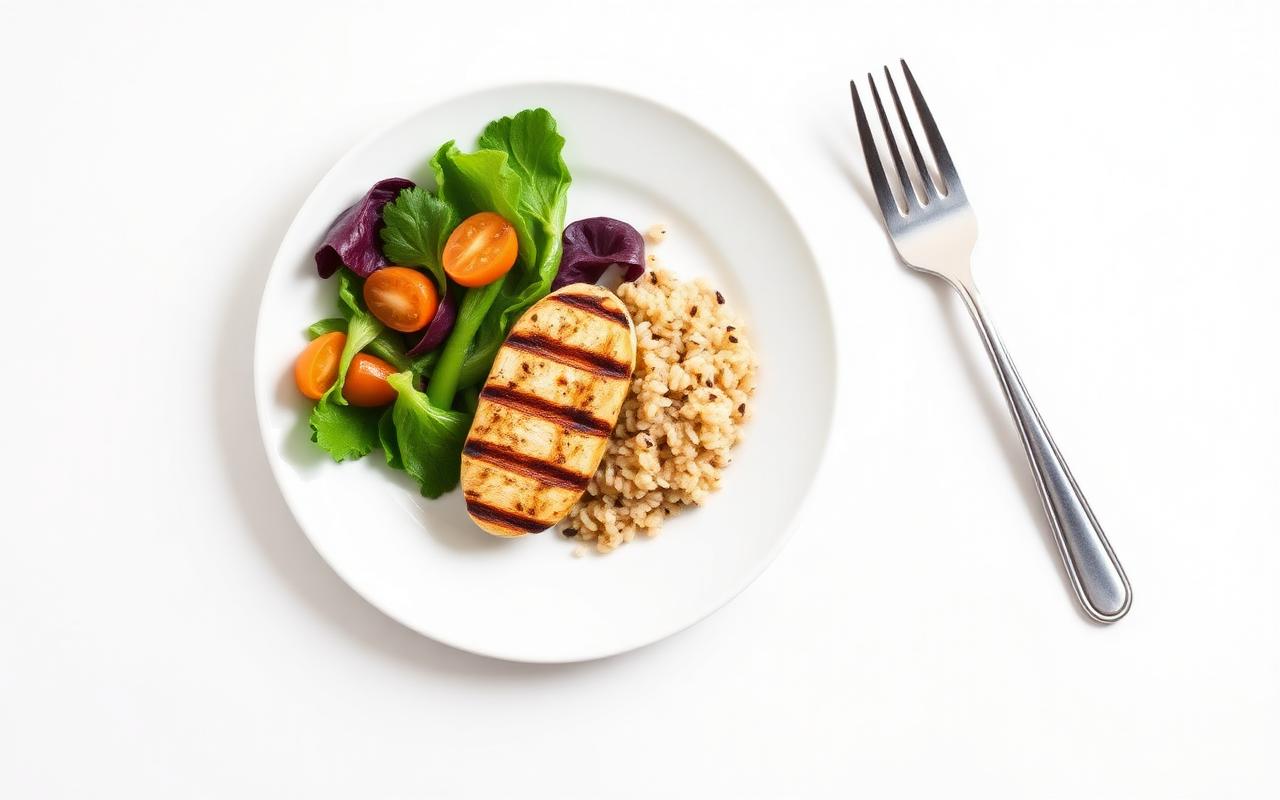
Achieving sustainable weight loss is fundamentally rooted in the principle of energy balance. To lose body fat, you must consistently maintain a calorie deficit, which occurs when your body uses more energy for daily functions and activity than it takes in through food and drink.
Understanding the Calorie Deficit Formula
A calorie is a unit of energy. Your body requires a specific amount of energy every day to maintain its current weight, known as your Total Daily Energy Expenditure (TDEE). When you consume fewer calories than your TDEE, your body must draw the remaining energy from stored fuel, primarily body fat.
The standard calculation for weight loss has historically focused on the 3,500-calorie rule, which suggests that a cumulative deficit of 3,500 calories results in one pound of fat loss. While individual metabolism varies, aiming for a daily deficit of 500 to 750 calories is the clinical standard for losing approximately 1 to 1.5 pounds per week.
Calculating Your Maintenance Calories
Before you can determine your deficit, you must establish your baseline. This is done through two steps: calculating your Basal Metabolic Rate (BMR) and then adjusting for your physical activity level.
The Mifflin-St Jeor equation is currently considered the most accurate standard for healthy adults:
- Men: (10 × weight in kg) + (6.25 × height in cm) - (5 × age in years) + 5
- Women: (10 × weight in kg) + (6.25 × height in cm) - (5 × age in years) - 161
Once you have your BMR, multiply it by an activity factor:
- Sedentary (little to no exercise): BMR × 1.2
- Lightly active (1-3 days/week): BMR × 1.375
- Moderately active (3-5 days/week): BMR × 1.55
- Very active (6-7 days/week): BMR × 1.725
For example, a 35-year-old woman weighing 170 lbs (77 kg) at 5'4" (163 cm) who is sedentary would have a TDEE of approximately 1,850 calories. To lose weight, her target intake would be roughly 1,350 calories.
Setting Your Target Deficit
While it is tempting to cut calories drastically to see faster results, "crash dieting" often leads to muscle loss and metabolic adaptation. Most health organizations, including the USDA and the Academy of Nutrition and Dietetics, recommend that women do not consume fewer than 1,200 calories per day and men no fewer than 1,500 calories per day unless under medical supervision.
Deficit Ranges and Outcomes
| Deficit Level | Daily Calorie Cut | Expected Weekly Loss | Sustainability |
|---|---|---|---|
| Small | 250 calories | 0.5 lbs | Very High |
| Moderate | 500 calories | 1.0 lbs | High |
| Large | 750 - 1,000 calories | 1.5 - 2.0 lbs | Moderate |
| Aggressive | >1,000 calories | >2.0 lbs | Low |
The Role of Macronutrients in a Deficit
A calorie deficit determines if you lose weight, but your macronutrient (macro) distribution determines what kind of weight you lose. Without sufficient protein, the body may break down muscle tissue for energy during a deficit.
- Protein: Aim for 0.7 to 1.0 grams per pound of body weight. Protein is the most thermogenic macro, meaning your body burns more calories digesting it, and it provides the highest level of satiety.
- Fats: Aim for 20% to 30% of your total calories. Fats are essential for hormone production and the absorption of fat-soluble vitamins (A, D, E, and K).
- Carbohydrates: Use the remaining calories for carbohydrates. These are your body's preferred fuel source for workouts and brain function.
How to Create the Deficit: Food vs. Exercise
You can achieve a deficit through three primary methods: eating less, moving more, or a combination of both. Evidence suggests that a combination is most effective for long-term weight maintenance.
1. Nutrition-First Approach
It is significantly easier to "save" 500 calories by skipping a high-calorie snack than it is to burn 500 calories on a treadmill. For context:
- 1 Large Blueberry Muffin: ~450 calories
- 45 Minutes of High-Intensity Running: ~450 calories
Focus on volume eating—consuming foods that are low in calorie density but high in physical volume. This includes leafy greens, cruciferous vegetables, and watery fruits. Filling your plate with fiber-rich foods helps trigger stretch receptors in the stomach, signaling fullness to the brain even when calories are low.
2. Activity Augmentation
Exercise should be viewed as a tool to improve metabolic health and increase the "buffer" of your deficit.
- NEAT (Non-Exercise Activity Thermogenesis): This includes all movement that isn't formal exercise, such as walking, cleaning, or fidgeting. Increasing your daily step count from 3,000 to 10,000 can increase your daily burn by 300 to 500 calories.
- Resistance Training: Lifting weights helps preserve lean muscle mass. This is critical because muscle tissue is more metabolically active than fat tissue, helping to keep your BMR higher as you lose weight.
Overcoming Plateaus and Metabolic Adaptation
After several weeks or months in a calorie deficit, weight loss may stall. This is often due to metabolic adaptation, where the body becomes more efficient and burns fewer calories to perform the same tasks. Additionally, as you lose weight, your BMR naturally decreases because there is less of "you" to fuel.
To break a plateau:
- Recalculate your TDEE: Your calorie needs at 180 lbs are different than at 200 lbs.
- Increase NEAT: Often, when we eat less, we subconsciously move less.
- Take a Diet Break: Increasing calories to maintenance levels for 1-2 weeks can help reset hormonal signals (like leptin and cortisol) before returning to a deficit.
Practical Tracking and Accuracy
Accuracy is the most common reason people fail to see results despite "being in a deficit." Studies show that most people underestimate their calorie intake by 30% to 50%.
- Use a Food Scale: Measuring by volume (cups/spoons) is often inaccurate. Weighing in grams ensures you are actually eating the portion size listed on the label.
- Account for Hidden Calories: Cooking oils (120 calories per tablespoon), creamers, and sauces can easily add 300+ unaccounted calories to a daily total.
- Consistent Logging: Apps like Caloriez can scan a meal photo to log this automatically, reducing the friction of manual entry and improving the consistency of your data.
Common Mistakes to Avoid
- Estimating "Burned" Calories: Fitness trackers often overestimate calories burned during exercise by up to 20-40%. Do not "eat back" all your exercise calories; instead, treat them as a bonus to your deficit.
- The "Weekend Reset": Being in a 500-calorie deficit Monday through Friday creates a 2,500-calorie buffer. However, heavy caloric intake on Saturday and Sunday can easily erase that entire weekly deficit.
- Ignoring Sleep and Stress: High cortisol levels from lack of sleep can lead to water retention and increased cravings for hyper-palatable (high-fat, high-sugar) foods, making it harder to stick to your targets.
Key Takeaways
- Calculate your TDEE accurately and subtract 500 calories for a sustainable 1-lb weekly weight loss.
- Prioritize protein (0.7-1g per lb) to protect muscle mass and manage hunger while in a deficit.
- Focus on food volume by incorporating high-fiber vegetables to feel full on fewer calories.
- Use tools for accuracy, including food scales and tracking apps, to prevent underestimating your actual intake.
- Combine nutrition with movement, emphasizing both resistance training and daily steps (NEAT) for the best metabolic results.
Track your calories the easy way
Caloriez uses AI to log meals from a single photo — calories, protein, carbs, and fat in seconds. Free on the App Store.
Download on the App Store