Meal Planning
Meal Prep for Weight Loss: Beginner's 7-Day Guide
Meal prep removes 90% of bad decisions before you make them. Here is a beginner-friendly 7-day plan.
June 9, 2026 · 10 min read
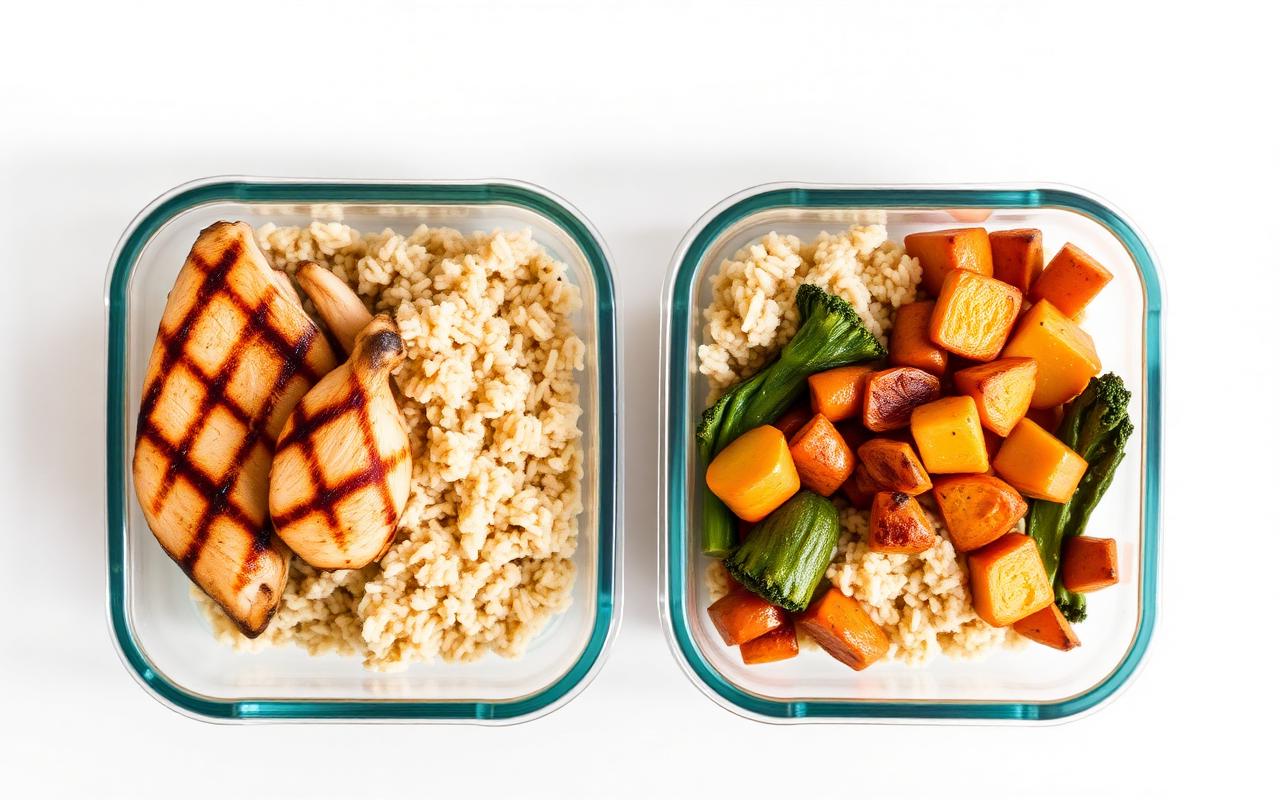
Successfully losing weight is rarely about having superhuman willpower; it is about reducing the number of decisions you have to make when you are hungry. Meal prep is the most effective tool for weight loss because it removes the convenience of high-calorie takeout and replaces it with portion-controlled, nutrient-dense options already sitting in your refrigerator.
This guide provides a science-backed framework for managing your caloric deficit through structured meal preparation. By the end of this article, you will understand the math behind weight loss, the mechanics of bulk cooking, and how to execute a 7-day plan that fits into a busy schedule.
The Science of Weight Loss and Meal Prep
To lose weight, you must maintain a caloric deficit, meaning you consume fewer calories than your body burns through its Total Daily Energy Expenditure (TDEE). Most health organizations, including the USDA and the CDC, suggest a deficit of 500 to 750 calories per day to achieve a safe weight loss of 1 to 1.5 pounds per week.
Calculating your needs involves three main components:
- Basal Metabolic Rate (BMR): The energy your body needs at rest.
- Activity Level: A multiplier based on how much you move daily.
- Thermic Effect of Food (TEF): The energy spent digesting nutrients, which is highest for protein.
The power of meal prep lies in its ability to lock in these numbers. When you cook for yourself, you control the oils, fats, and hidden sugars that often double the calorie count of restaurant meals.
Core Macronutrient Targets
While calories determine the weight on the scale, macronutrients (macros) determine your body composition. For weight loss and muscle retention, most experts recommend the following distribution:
- Protein (30-35%): Protein has the highest satiety. Aim for 0.7g to 1g of protein per pound of target body weight.
- Carbohydrates (35-40%): Focus on complex carbohydrates like brown rice, oats, and sweet potatoes to provide sustained energy.
- Fats (25-30%): Essential for hormone health. Use healthy sources like avocados, nuts, and olive oil.
Essential Tools for Successful Prep
Before you shop, ensure you have the logistics handled. High-quality storage is not just about organization; it preserves the texture and safety of your food.
- BPA-Free Airtight Containers: Glass is preferred for reheating; plastic is lighter for commuting.
- Digital Food Scale: For accuracy, weigh ingredients in grams. Volume measurements (cups/spoons) can be off by 15-30%.
- Slow Cooker or Instant Pot: These allow for "set and forget" cooking of large protein batches.
- Sheet Pans: Crucial for roasting large quantities of vegetables and proteins simultaneously.
The 7-Day Meal Prep Strategy
A common mistake beginners make is trying to cook 21 different meals. This leads to burnout and food waste. Instead, use the "Batch and Mix" method. You prepare 3-4 main components and rotate them through the week.
The Prep List (Example for a 1,500-1,800 Calorie Target)
Preparing these quantities on Sunday will cover most of your lunches and dinners:
- Proteins: 2 lbs Grilled Chicken Breast, 1 lb Lean Ground Turkey, 1 carton of Tofu or 6 Hard-boiled Eggs.
- Carbs: 3 cups (dry) Quinoa or Brown Rice, 2 lbs Roasted Sweet Potatoes.
- Vegetables: 4 heads of Broccoli (steamed/roasted), 2 lbs Sautéed Spinach/Kale, 4 Bell Peppers (sliced).
Sample Weekly Meal Comparisons
Using the prep list above, notice the calorie difference between home-prepped versions and restaurant alternatives.
| Meal Type | Home Prepped (Approx. Cal) | Restaurant Equivalent | Restaurant Cal |
|---|---|---|---|
| Chicken & Veggie Bowl | 450 kcal | Fast Food Burrito Bowl | 850+ kcal |
| Turkey Meatballs & Pasta | 520 kcal | Chain Italian Pasta | 1,200+ kcal |
| Quinoa Salad w/ Feta | 380 kcal | Deli Pre-packaged Salad | 650+ kcal |
| Overnight Oats | 350 kcal | Bakery Muffin & Latte | 750+ kcal |
A Beginner-Friendly 7-Day Schedule
Sunday: The Prep Day (90-120 Minutes)
- Roast: Place seasoned chicken and sweet potatoes on sheet pans at 400°F (200°C) for 25-30 minutes.
- Boil: Set a pot of water for grains (rice/quinoa) and another for hard-boiled eggs.
- Chop: Slice raw vegetables for snacks and salads.
- Assemble: Portion your Monday, Tuesday, and Wednesday lunches into containers immediately.
Monday - Wednesday: The Foundation
Focus on your pre-portioned containers.
- Breakfast: Overnight oats (prepped Sunday night).
- Lunch: Chicken, brown rice, and broccoli.
- Dinner: Ground turkey tacos using pre-cooked turkey and fresh peppers.
Thursday: The "Mid-Week Pivot"
By Thursday, cooked chicken can lose its freshness. This is the day to use your frozen stash or quick-cook items like shrimp or eggs to prevent "food fatigue."
Friday - Sunday: Flexibility
Use the remaining prepped grains and "clean out the fridge" by making a stir-fry or a large salad with your leftover proteins.
Mastering Portion Control and Tracking
Even "clean" foods have calories. To ensure you stay in a deficit, you must track your intake. A medium-sized avocado contains roughly 240-300 calories; if you add one to every meal without tracking, you could accidentally wipe out your entire daily deficit.
Modern technology has simplified this process. Instead of manually looking up every ingredient in a database, apps like Caloriez can scan a meal photo to log this automatically, helping you maintain a precise record of your macros without the friction of manual entry.
Calculating Your Plate
A standard weight-loss plate should follow this visual guide:
- 50% Fiber: Non-starchy vegetables (greens, peppers, broccoli).
- 25% Lean Protein: Chicken, turkey, white fish, or legumes.
- 25% Complex Carbs: Small portion of grain or starch.
- 1 Thumb-sized Portion of Fat: Oils, nuts, or cheese.
Avoiding Common Pitfalls
Many beginners fail at meal prep because they over-complicate the recipes or under-season the food.
- Under-seasoning: Plain chicken and broccoli is the fastest way to quit. Use calorie-free seasonings like garlic powder, smoked paprika, cumin, and hot sauce to keep flavors interesting.
- Lack of Variety: If you eat the exact same meal 14 times a week, you will likely binge on junk food by Friday. Prep two types of protein and two types of starch to swap between.
- Storing Hot Food: Never seal a container while the food is steaming. This creates moisture buildup, making your vegetables soggy and increasing the risk of bacterial growth. Let food cool for 20-30 minutes before sealing.
Food Safety and Storage Limits
Safety is paramount when cooking in bulk. The USDA recommends following the "4-day rule" for most cooked proteins.
- Refrigeration: Cooked poultry, ground meat, and seafood should be eaten within 3 to 4 days.
- Freezing: If you prep for the full 7 days, move Thursdays and Fridays meals into the freezer immediately on Sunday and thaw them in the fridge 24 hours before eating.
- Reheating: Ensure food reaches an internal temperature of 165°F (74°C) to kill any potential bacteria.
Key Takeaways
- Maintain a 500-750 calorie deficit for sustainable weight loss of about 1 pound per week.
- Prioritize protein (at least 30% of your calories) to keep you full and preserve muscle mass during dieting.
- Use the 3/3/3 method: Prep 3 proteins, 3 carbs, and 3 vegetables to create a variety of meal combinations without excessive cooking.
- Track accurately using a digital food scale and a tracking app to ensure your "healthy" portions aren't secretly exceeding your calorie goals.
- Follow food safety guidelines by consuming refrigerated prepped meals within 4 days or using the freezer for the latter half of the week.
Track your calories the easy way
Caloriez uses AI to log meals from a single photo — calories, protein, carbs, and fat in seconds. Free on the App Store.
Download on the App Store